
Closing the Loop: How SmartEnds VisnLine Powers Food Recycling Efficiency
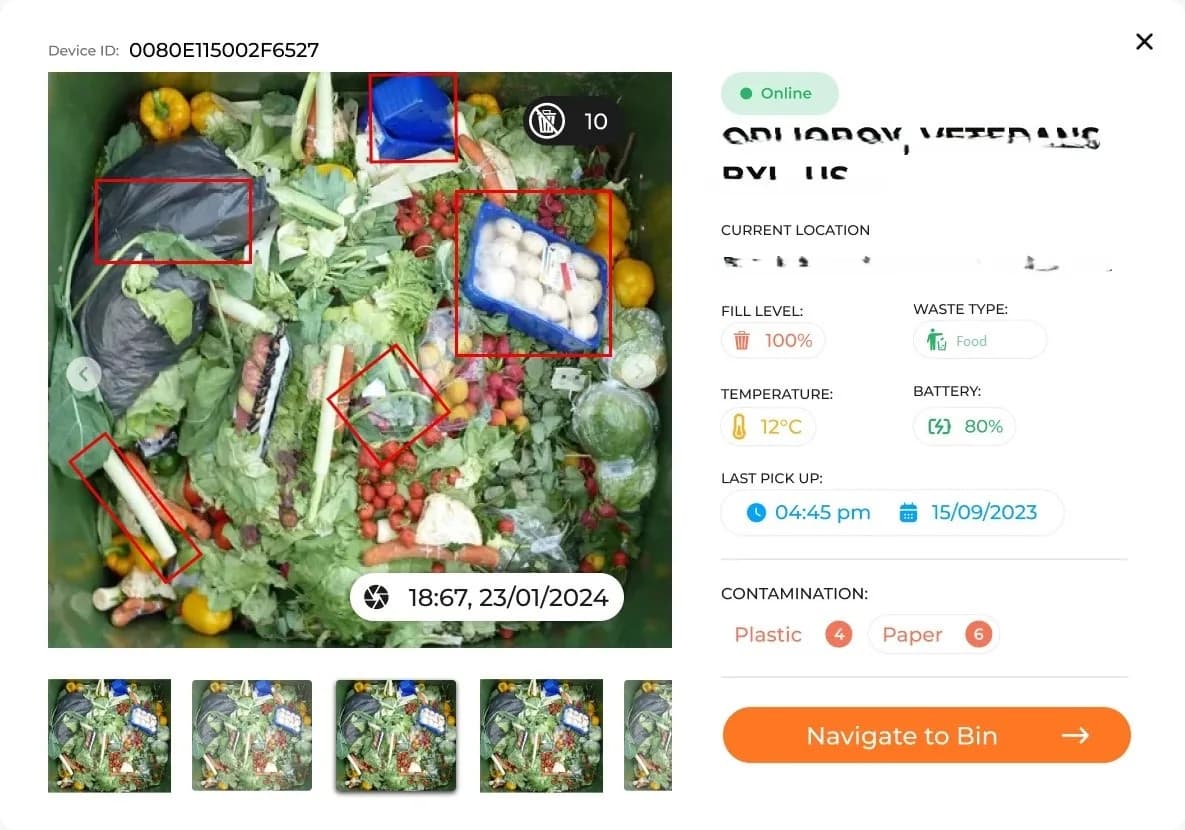
Summary: Food recycling (composting & anaerobic digestion) is a high-priority sustainability pathway — but it only works when feedstock is clean. SmartEnds VisnLine protects the value in organics collections by detecting non-food contaminants early, scoring load quality, and streamlining collection and sorting so processors and municipalities recover more value and meet regulatory goals.
Why food waste recycling needs clean feedstock
Food and organic recycling divert material away from landfills — lowering methane emissions and recovering nutrients or energy. But contamination (plastic bags, foil, non-compostable packaging, chemicals) can spoil entire compost batches or damage anaerobic digesters, causing downtime and lost revenue. The scale of the problem is significant: U.S. estimates show tens of millions of tons of food waste generated annually, much of which still ends up in landfill without diversion. Environmental Protection Agency+1
What SmartEnds VisnLine does in the food waste recycling chain
SmartEnds VisnLine is designed to be deployed at collection points and transfer stations to do three practical things:
- Detect non-food contaminants at source. Cameras + ML classify items in the bin (plastic, packaging, metals). When a contamination threshold is exceeded, the system flags the bin for immediate attention so crews can segregate or schedule targeted collections. Industry deployments show this approach is effective at catching problematic items before they reach processors. winnowsolutions.com+1
- Provide quality scoring for each load. Every collection receives a quality score that processors can use to prioritize acceptance, plan preprocessing, and set expectations for throughput and yield. Scores reduce surprises at the receiving facility and lower rejection rates.
- Trigger operational workflows. Alerts feed into dynamic routing and work orders so collection teams can act quickly (segregation, extra bins, on-site cleanup) rather than waiting for downstream sorting to identify problems.
How this improves collection, processing and overall food waste recycling (operational wins)
- Cleaner feedstock, higher yields. Better feedstock purity increases compost quality and biogas yield per tonne, turning otherwise wasted organics into higher-value outputs. Studies and industry pilots show AI and process controls can materially reduce contamination and improve recovery rates. refed.org+1
- Lower sorting & processing costs. When less manual sorting is required, facilities reduce labour costs and processing cycle time — improving throughput and lowering per-tonne processing expenses.
- Fewer operational disruptions. Removing contaminants early reduces the risk of equipment damage and downtime at composting and digestion facilities. This translates directly to avoided repair costs and more consistent OEE.
- Stronger compliance & reporting. Automated, time-stamped contamination logs and quality dashboards simplify regulatory reporting and help meet food-waste diversion targets. Regions with strict organics rules increasingly expect robust measurement and traceability. Environmental Protection Agency
Commercial value: compost, biogas and circular outcomes
Improved feedstock purity means processors can produce higher-grade compost or extract more biogas per tonne — both of which can increase revenue streams from product sales or energy generation. For municipalities, cleaner organics improve circular-economy metrics and lower the total cost of waste management by reducing rejected loads and landfill tipping fees. Market forecasts show persistent growth in food waste reclying management solutions as regulations and corporate sustainability programs ramp up. MAXIMIZE MARKET RESEARCH
How to run a quick SmartEnds VisnLine pilot (SmartEnds playbook)
- Pick a high-impact zone (markets, food courts, hospital kitchens) where contamination risk is highest.
- Install SmartEnds VisnLine at bin clusters and transfer points — combine with fill-level sensors if possible.
- Run baseline monitoring for 4–8 weeks to capture contamination patterns and load profiles.
- Activate alerts and workflows (crew notifications, targeted collection).
- Measure KPIs: contamination rate, rejected loads, processing throughput, OPEX changes, and revenue uplift from higher-grade outputs.
- Scale to additional routes and facilities using data from the pilot.
Best practices & pitfalls
- Pair tech with education. Cameras + alerts work best when combined with targeted public or commercial education (signage, outreach to food generators).
- Protect privacy & data. Use edge processing and blur faces; only store metadata needed for alerts and reporting.
- Integrate with operations. Route optimization, crew apps, and processor intake systems must be connected for the full value chain to improve.
Next steps
If you manage organics collections or run a compost/AD facility, start with a 4–8 week SmartEnds VisnLine pilot to quantify feedstock quality gains. Contact our team to design a pilot tailored to your collection density and processing capacity.
How does SmartEnds VisnLine improve food waste recycling?
By detecting contaminants at collection points and transfer stations, SmartEnds VisnLine enables targeted collection, quality scoring and reduced manual sorting—resulting in higher-quality organics, better compost/biogas yields and lower processing costs.
What is SmartEnds VisnLine for food waste?
SmartEnds VisnLine for food waste uses cameras and machine-learning models to automatically identify non-food contaminants and classify organic materials in food waste recycling streams, improving feedstock quality before it reaches composting or anaerobic digestion facilities. (See our CSP contamination detection page.)
What contaminants can SmartEnds VisnLine detect in organics collections?
SmartEnds VisnLine commonly detects plastics (bags, films), metal, glass, non-compostable packaging and bulky non-food items—flagging loads that could harm compost or digester operations.
Start with a pilot — 3 months for sensors, 3 to 6 months for AI cameras trained on your waste.
Live dashboard from day one.
Book a demo